
And now we welcome the new year, full of things that have never been.-Rainer Maria Rilke
Words from a Wise Poet
As we face another upsetting reality regarding Covid-19 and the Delta variant causing another increase in infection rates and hospitalizations, conversations about public health and mask wearing, I feel the weariness that you most likely feel too. As we face the reality of corrupt power and sexual abuse and violation, of the threat to our freedom of voting and protection of rights, I feel the weariness you most likely feel too. I heard an interview with the author, Clint Smith, and he read this poem he wrote regarding continued injustices and violence towards black and brown bodies. I think it’s important at times to give language that bears the weightiness that is reality. From there, we can free up psychological resources to move forward.
When people say, “we have made it through worse before”
— Clint Smith
all I hear is the wind slapping against the gravestones
of those who did not make it, those who did not
survive to see the confetti fall from the sky, those who
did not live to watch the parade roll down the street.
I have grown accustomed to a lifetime of aphorisms
meant to assuage my fears, pithy sayings meant to
convey that everything ends up fine in the end. There is no
solace in rearranging language to make a different word
tell the same lie. Sometimes the moral arc of the universe
does not bend in a direction that will comfort us.
Sometimes it bends in ways we don’t expect & there are
people who fall off in the process. Please, dear reader,
do not say I am hopeless, I believe there is a better future
to fight for, I simply accept the possibility that I may not
live to see it. I have grown weary of telling myself lies
that I might one day begin to believe. We are not all left
standing after the war has ended. Some of us have
become ghosts by the time the dust has settled.
AAPI Mental Health

Several months ago, I was invited to speak with Dr. Nicole Cross on In Focus Texas about the impact of hate crimes on the AAPI community’s mental health. The segment can be found here.
Re-entry Anxiety

I was given the opportunity to talk with Dr. Nicole Cross on In Focus Texas about the experiences many are having as states re-open and re-emerge at this point in the pandemic. You can watch the segment here.
A Blessing, Wholeness
“One eye sees, the other feels.” -Paul Klee
"Unprecedented"
We’ve heard this word describe months and months of a “new normal” and life in quarantine. There is a collective grief and trauma the world over that has been our reality since last year. There has been much civil unrest and loss of life. I do not have anything new to contribute that hasn’t already been said by people much brighter and more thought-provoking than I. I just wanted to share that I am with you in my own heartache, my devastation, my grief, my anger…all while trying to find ways to contribute to important issues and caring for myself and those around me. We don’t do it perfectly. That’s impossible. But we can do so intentionally and thoughtfully and carefully and kindly. Again, nothing profound to be said except I’m here with you in this place of unprecedence navigating to the best of our ability, seeking to learn and grow and give.
“ If we stay present to our discomfort, we will also feel something else arising—something more real, capable, sensitive, and exquisitely aware of ourselves and of our surroundings.” (The Wisdom of the Enneagram)
All In The Family
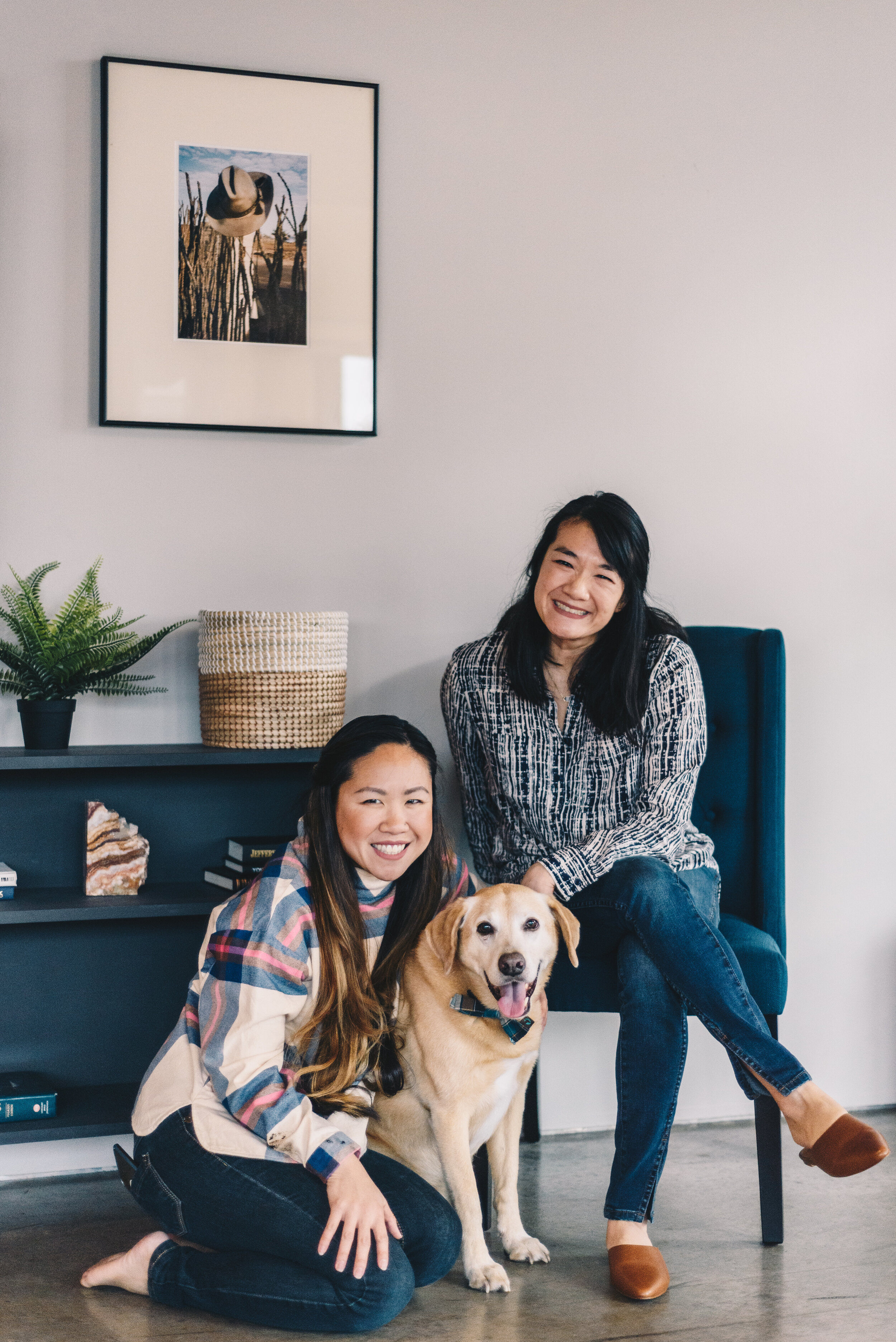
I am happy to announce the newest addition to the Abound & Flourish family (who happens to be related to me), Stephanie Dang, APRN, MSN, ACNS-BC, PMHNP-BC (she owns half the alphabet)!
Stephanie is a a Psychiatric Mental Health Nurse Practitioner and I have had the pleasure of being able to consult and collaborate with her on many cases. I’m thankful for her expertise, compassion for clients who are suffering from mood disorders and PTSD (the population I specialize working with), and the continuity of care she and I are able to provide to those in need. It’s a bonus that she is my sister and friend. I highly respect her profession and medication management often benefits the therapeutic work I am doing with clients.
I wanted to take some time to introduce her to you with a short interview.
Q: What drew you to the mental health field?
A: What drew me to the mental health field was observing the significant need in almost, if not every encounter I had with patients. I previously treated the medical needs of patients, but quickly learned their mental health and psychological needs impacted their medical health and often times were neglected.
Q: What do you most enjoy about your job?
A: What I enjoy most is providing hope for patients who are in the midst of their most difficult days. I also enjoy meeting patients where they are in their treatment and addressing their questions and concerns in order to empower them, this allows patients to participate fully in their care.
Q: What do you find most challenging your job?
A: What I find most challenging is the process itself. Addressing mental health needs does not occur quickly and is not always straight forward. It can be discouraging especially when the patient is eager to improve. I have to remind myself to set reasonable expectations, but also confidence in the process.
Q: What would you say to someone uncertain whether or not medication management is needed in their case?
A: If a patient is uncertain about the recommendation to initiate medication I would want to understand their hesitation and address their concern. I would also educate the patient on how medications addresses the neurobiological component of mental health. As important it is for patients to also address their behaviors and environment, it is also important to address the neurobiological factor.
Q: What would you say to someone who thinks therapy/exercise/diet is enough to treat their symptoms? Or vice versa, that medication is enough to treat their symptoms?
A: If a patient believes therapy/exercise/diet and other behavioral modifications are sufficient to treat their symptom and find themselves in remission, then I would support their plan of care. And vice versa. However, often times addressing behavioral modifications or medications alone is not sufficient and patients still remain with unmanaged symptoms. As a provider I am here to educate and recommend safe and evidence based practices to help reach patients' goal of remission. Studies and data have shown both behavioral modifications and medication management has better outcomes.
“As a provider I am here to educate and recommend safe and evidence based practices to help reach patients’ goal of remission. Studies and data have shown both behavioral modifications and medication management has better outcomes. ”
Q: What do people often misunderstand or have concerns about mental health and medication management?
A: Some of the common misunderstanding or concerns about mental health and medication management is taking prescribed medications leads to apathy or feeling "Zombie like", dependency, too many side effects, "putting a bandaid and not fixing the problem," and the chronic treatment. With all medications there are side effects and the recommendation for medication management in treatment mental health disorders is not to numb your personality or who you are, but rather allows you to become more of who you are. It is about finding the right medication that minimizes the negative side effects. It is also important to participate in psychotherapy to address the underlying issues as to not put a "bandaid." Some patients over time are successful to discontinue medication management under the care of their provider while others maintain on medications indefinitely.
Q: How can someone go about seeing if you might be a good fit for them?
A: It is important for patients to feel comfortable and safe with their provider. It is also important for the patient to feel heard and participate in their treatment. I suggest having a few appointments to become familiar with my approach and if it meets their needs. It would be my pleasure to join patients in their process to healing and well being.
“What I enjoy most is providing hope for patients who are in the midst of their most difficult days. I also enjoy meeting patients where they are in their treatment and addressing their questions and concerns in order to empower them, this allows patients to participate fully in their care. ”
Abound & Flourish, What's in a Name?
Our website got a little pick me up with an updated logo. When I was naming the practice, I didn’t want it to be my name (website domain is different for simplicity’s sake) because counseling isn’t about me. It’s about the client and their personal growth. As verbs the difference between abound and flourish is that abound is to be full to overflowing while flourish is to thrive or grow well. This is what I want your experience to be as you dive into the therapeutic work that awaits you. I hope that you would find yourself overflowing with gratitude, joy, understanding, acceptance and compassion for self and others. I hope that taking these gifts with you, you would continue to grow well even after you leave my office.
[As I consulted with Erica Dang on the logo she created, here is her process that I wanted to share:
- When I think of the word "abound", I think of being plentiful, full. I can't help but think of a thicker font for this word.
- The bolder font also alludes to stability, which you mentioned you want your clients to feel when they visit you.
- "Flourish" is a whimsical word, that most people can't help but think of growing. It takes good (thick strokes) and difficult (thin strokes) experiences to truly grow. The calligraphic approach you'll see in one of the options shows that those thick and thin strokes creates a beautiful picture when we look back on our lives.
I so value collaborating with professionals in different spheres because their gifts and talents help communicate and contribute more than I can on my own.]
